01 · On Location
Drawing standing up
One hand holds the book, which decides the size of the book, the grip on the pencil and how long you can work before the arm gives out.
 01.1
01.1The held book changes everything
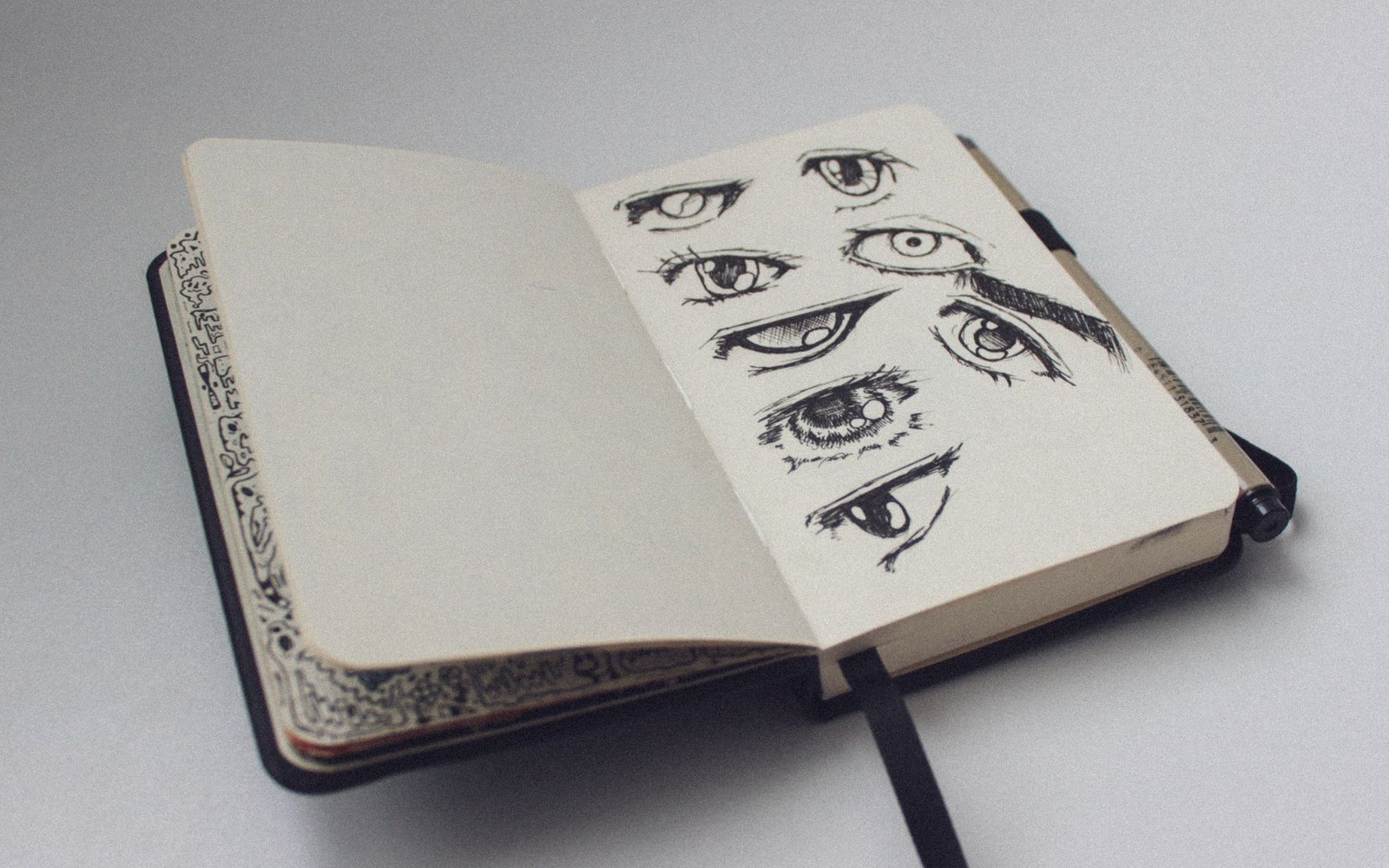
Standing drawing is a system, and the hand holding the book is where the system starts. The book's weight and dimensions determine grip, and grip determines how the drawing arm can move. A large hardback held in the crook of one arm is stabilised against the body — but it leaves the drawing hand with a long, heavy lever to manage, and after twenty minutes the shoulder of the holding arm begins to fail. A small book, one that the fingers can wrap around the spine, keeps the weight close to the chest and frees the drawing wrist to pivot without fighting the load. Format is not an aesthetic choice first; it is an ergonomic one.
The pencil grip that works at a desk — a relaxed tripod hold, the hand resting on paper — is unavailable when the paper is vertical and in the air. In standing work, the grip tends to shorten: the fingers move closer to the point, the hand can no longer rest anywhere, and control becomes muscular rather than skeletal. Marks made this way carry a different character. There is more tremor in a fine line, more urgency in a broad one. Ronald Searle, working under conditions that made sitting impossible and privacy impossible, developed a line that was fundamentally a standing line — fast, pressure-varied, alive to the risk of interruption. The drawings he made in Changi between 1942 and 1945 were never made at leisure. That is audible in every mark.
The ergonomics in sequence
- 01Book size — determines grip type and how weight is distributed
- 02Grip position — shortens from resting tripod to unsupported close hold when standing
- 03Holding arm — fatigues in 15–30 minutes depending on book weight; resting the edge against a surface extends this
- 04Time limit — compresses colour decisions and increases annotation use
Arm, book, paper, time
The practical limit on standing work is not usually seeing or knowing what to draw — it is the arm that holds the book. Most people find that arm begins to fatigue somewhere between fifteen and thirty minutes, depending on the book's weight and whether the elbow is bearing any of the load. Resting the bottom edge of the book against a wall, a railing or a raised knee when one foot goes up on a step adds minutes without changing position dramatically. Edward Ardizzone, who sketched throughout the Second World War as an official British war artist, worked in conditions where neither a table nor a seat could be assumed — his books are modest in size, dense in use, the drawings small enough to be made without sweeping arm movements.
The waterbrush and pans combination matters here for the same structural reason. A brush loaded from a reservoir needs no second hand to manage a water pot; the palette, if small enough, can be held alongside the book in the same hand, pinched between the fingers. The moment a second container enters the equation, a surface is required, and a surface is not always available. The kit that does not require a surface is the kit that keeps the work going.
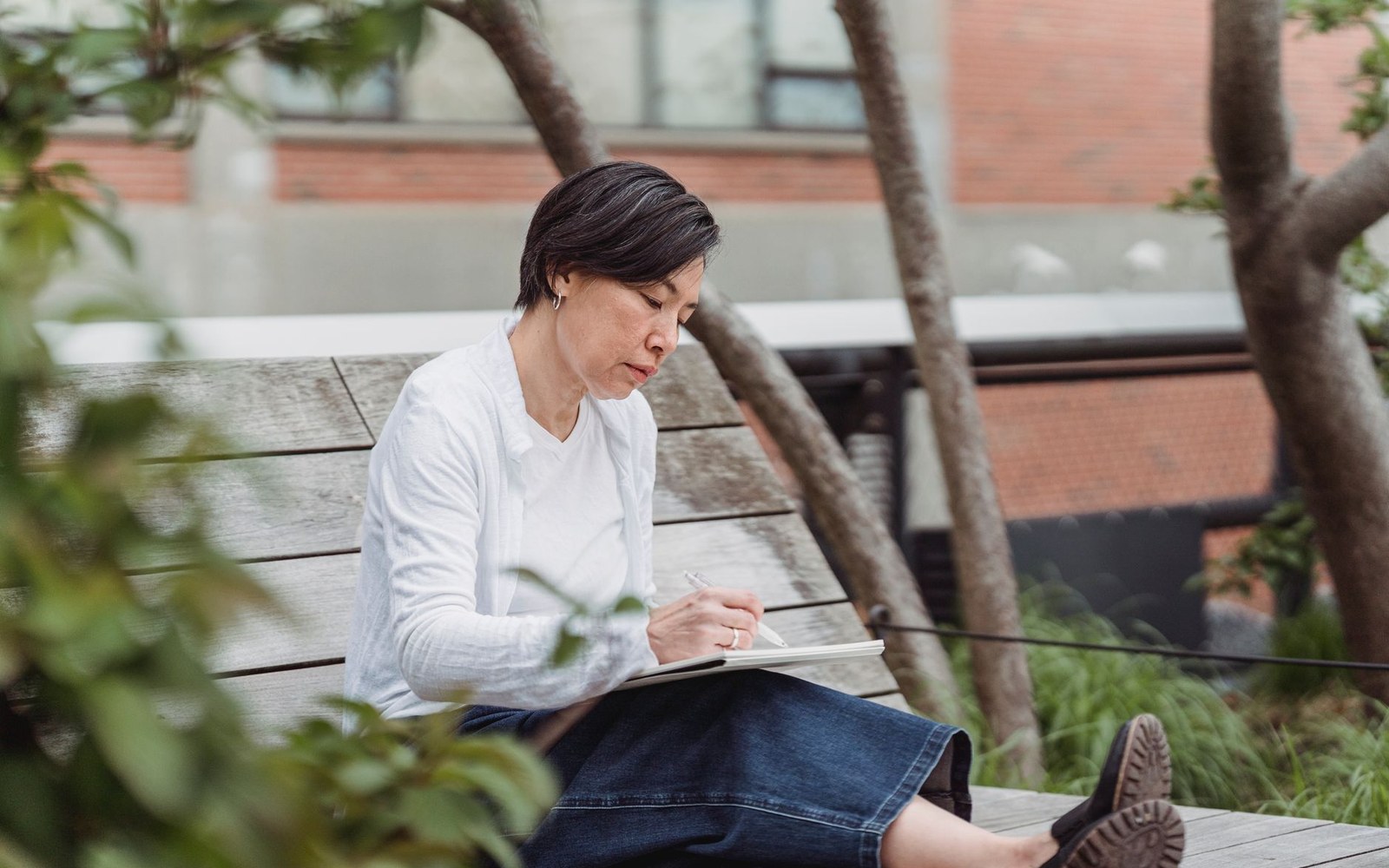
Colour decisions simplify under fatigue. When the holding arm is tiring, the drawing hand works faster and commits sooner. That is not necessarily a loss. Colour notes made quickly are often truer to the first impression — the tonal relationship that struck the eye before the brain began composing — than colour applied at leisure. Toned paper earns its place in standing work partly for this reason: the mid-tone is already given, and the drawer needs only light and dark, not the full range.
Annotation — the word or number written beside a colour passage or a structural note — is the standing drawer's memory. A colour too complex to mix in two minutes can be named; a proportion that the arm cannot hold steady long enough to measure can be noted as a word. J. M. W. Turner's sketchbooks, many of them pocket-scale, are full of exactly this: written colour notes running alongside incomplete washes, the hand recording what the eye knew but the book-holding arm would not allow time to render. The annotation is not a supplement to the drawing; it is part of the drawing, made under the same standing conditions.
What standing drawing produces, in the end, is a record that bears the physical trace of how it was made — the compressed format, the standing line, the quick colour note. That trace is not a flaw. A drawing made standing, under time pressure, in a space that did not accommodate sitting, carries evidence of its own conditions. That evidence is the thing a photograph of the same scene does not contain.