01 · On Location
The Twenty-Minute Limit
When the light shifts or the crowd thins, the drawing closes whether you are ready or not.
 01.2
01.2What the window gives you
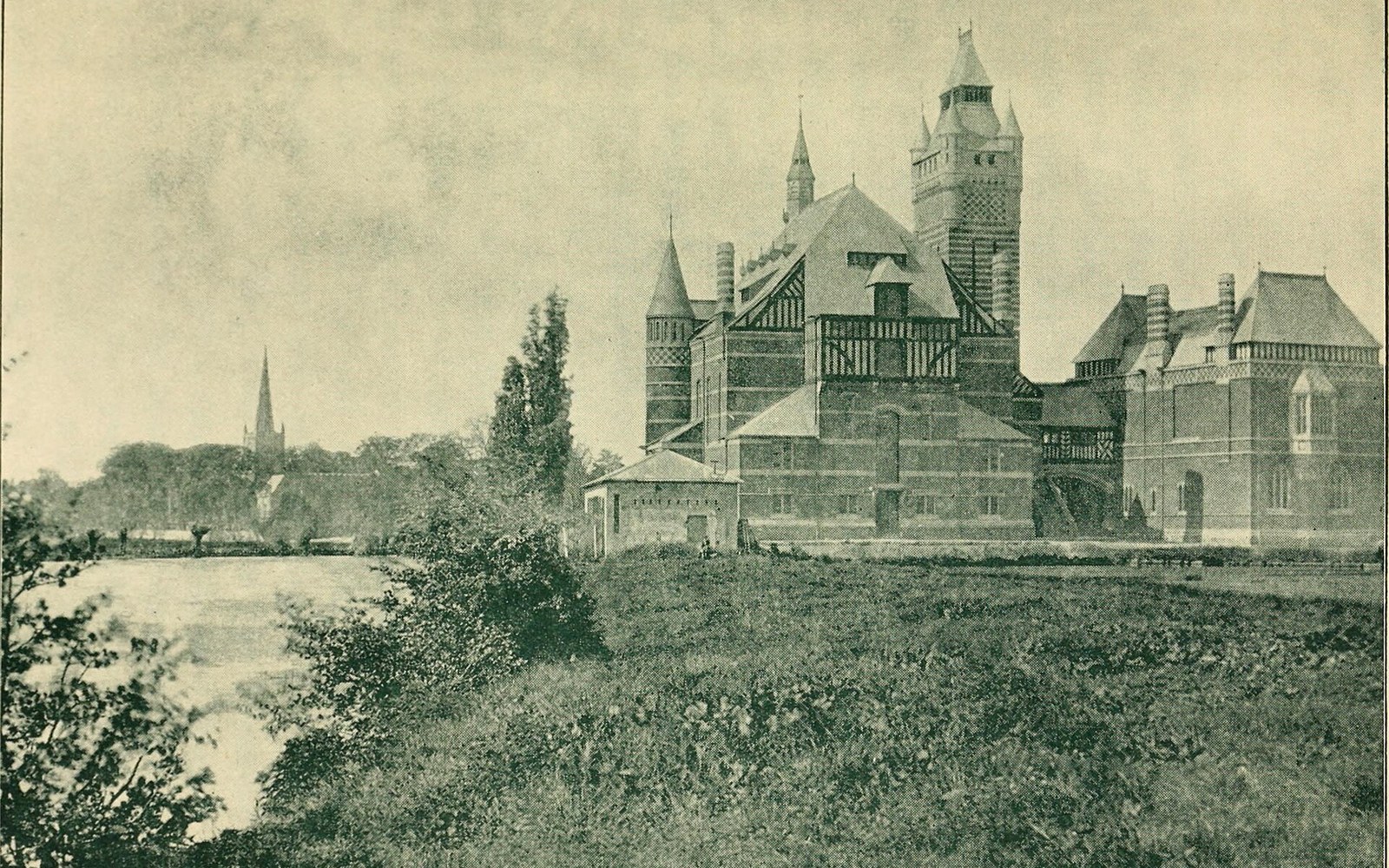
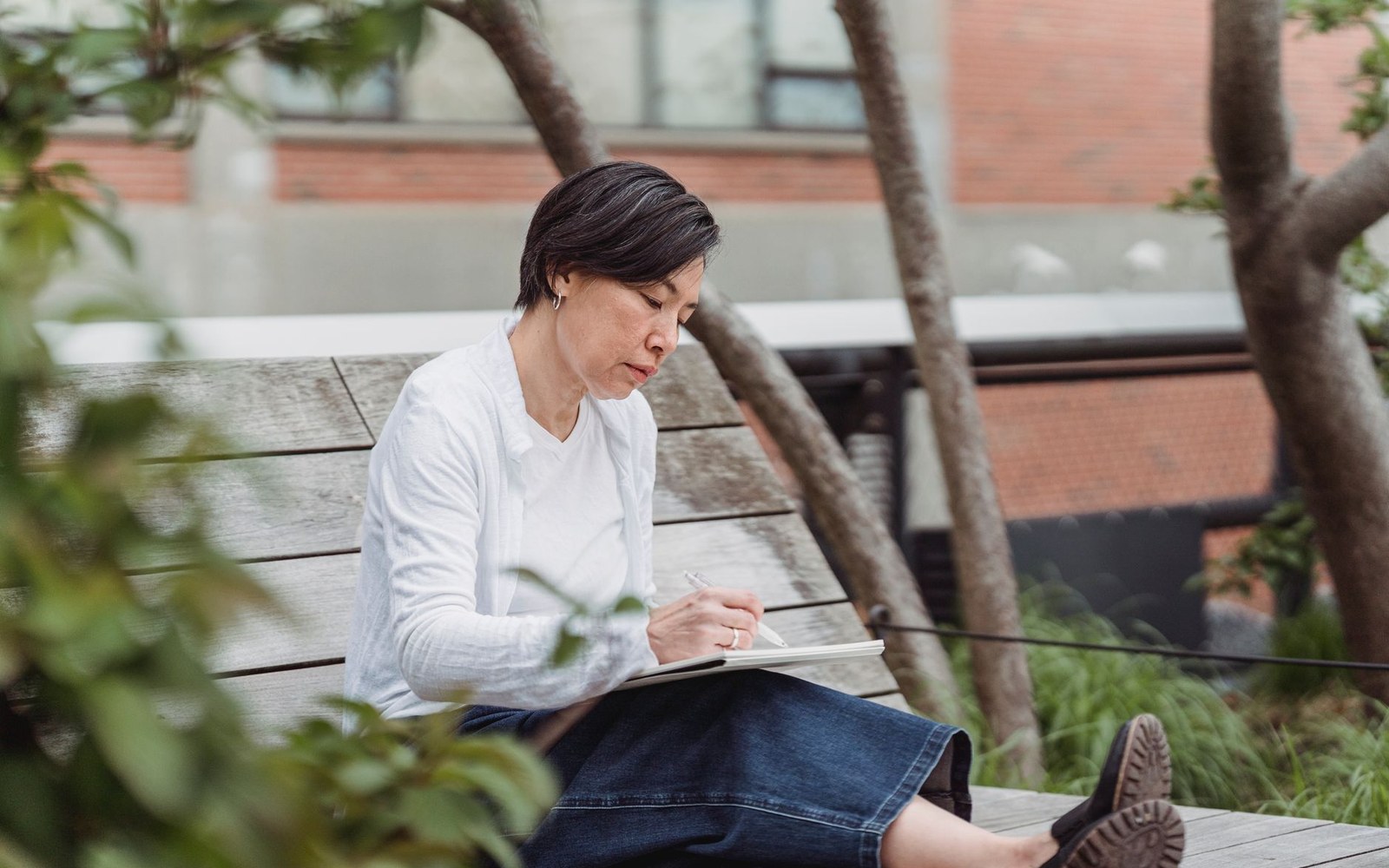
A location drawing is made inside a window of attention — the subject's, yours and the world's. Twenty minutes is not an arbitrary discipline. It is roughly the span before the light has moved enough to contradict the shadows you drew first, before the scaffolding lorry parks in your eyeline, before the person you placed in the foreground walks away and is replaced by someone who does not fit the composition at all. The limit is imposed, not chosen, and working within it changes what a drawing is allowed to be.
Turner understood this materially. His Venetian sketchbooks — held at the Tate as part of the Turner Bequest — are full of pages that read as incomplete by any conventional standard: a roofline, a smear of wash, a pencilled proportion mark. They are not unfinished. They are finished by the clock. He moved on when the information ran out, returning to the same view from a different book, a different hour, accumulating a parallax of the same subject across a day. The drawings gain from one another without any single page pretending to be the complete record.
What the drawing tracks under time pressure
- 01structural proportions — established first, in the opening minutes, before light shifts
- 02tonal key — overall light/dark balance, fixed early to survive later interruption
- 03colour notes in words — annotation as technical backup where pigment can't be trusted to dry in time
- 04composition by foreclosure — the frame is chosen before the scene resolves
Eugène Delacroix in Tangier in 1832 worked under similar pressure from light and circumstance. His Moroccan notebooks show watercolour applied fast and dry, with colour notes written across the wash where the wash could not be trusted to dry before the moment passed. The annotation was not an admission of failure; it was a technical solution — a way of banking information the pigment could not hold. Words on a drawing are how a sketch stays usable when the conditions that produced it are gone.
How the limit shapes the mark
Knowing that the window is short changes what you reach for first. Experienced location drawers typically establish the structural proportions in the opening minutes — measuring by eye with a pencil held at arm's length converts the subject into a ratio that survives the light moving. Once that skeleton is on the page, the drawing can survive interruption: if the light shifts at minute twelve, the tonal structure was already recorded; what's lost is refinement, not truth.
Edward Ardizzone, working as a war artist through North Africa and Italy in the 1940s, consistently produced drawings that look unhurried but cannot have been. The line is confident because it was not corrected; there was no time for correction. Ronald Searle, under conditions far more extreme at Changi, produced records that are compressed almost to cipher — gesture and shadow rather than anatomy. Both bodies of work demonstrate the same principle: speed changes the mark, and the hurried line is not an inferior line. It carries its own kind of information, including the information that something was moving, or dangerous, or about to end.
The twenty-minute limit also governs composition by foreclosure. You choose the frame before you know how the scene develops. A figure that enters after minute five either belongs to the drawing or it doesn't, and you decide in the act of including it, not by deliberation. This is why so many location drawings have an energy that studio work, however technically superior, tends to lack — the composition was a bet placed under pressure, and the paper shows the bet being made.
What is lost and what isn't
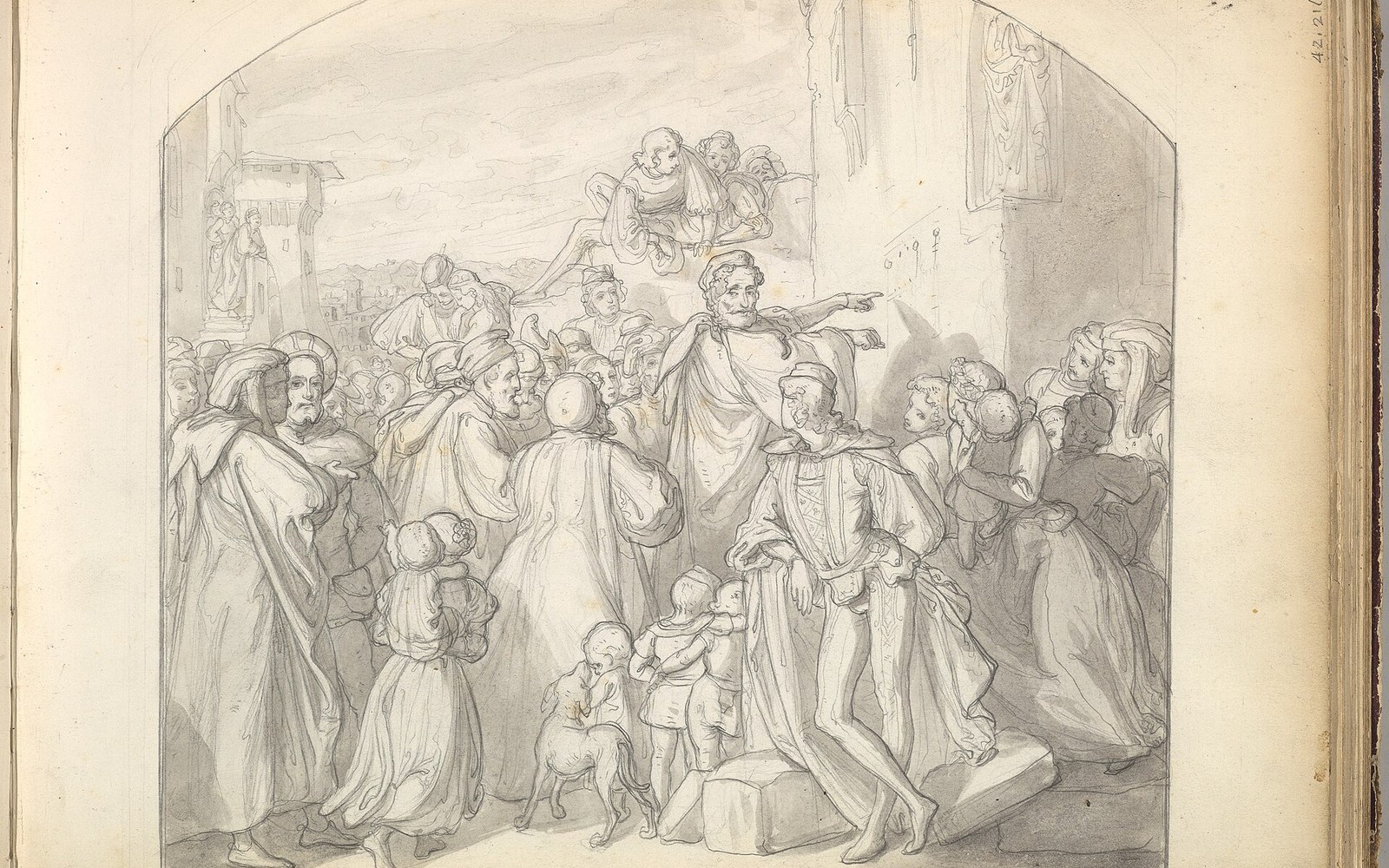
What the limit takes is completeness in the conventional sense: every window glazed, every cobble indicated, every shadow graduated. What it leaves is the record of looking — where your eye actually went, what you decided mattered in the available time. A photograph made at the same moment captures everything in the frame with equal weight. The drawing captures attention, which is not equally distributed. The incompleteness is the record.
This is the sense in which the twenty-minute sketch is not a draft of something more finished. It is the thing itself, bounded by the real conditions of making it, and those conditions are part of what it documents.