01 · On Location
Being Watched
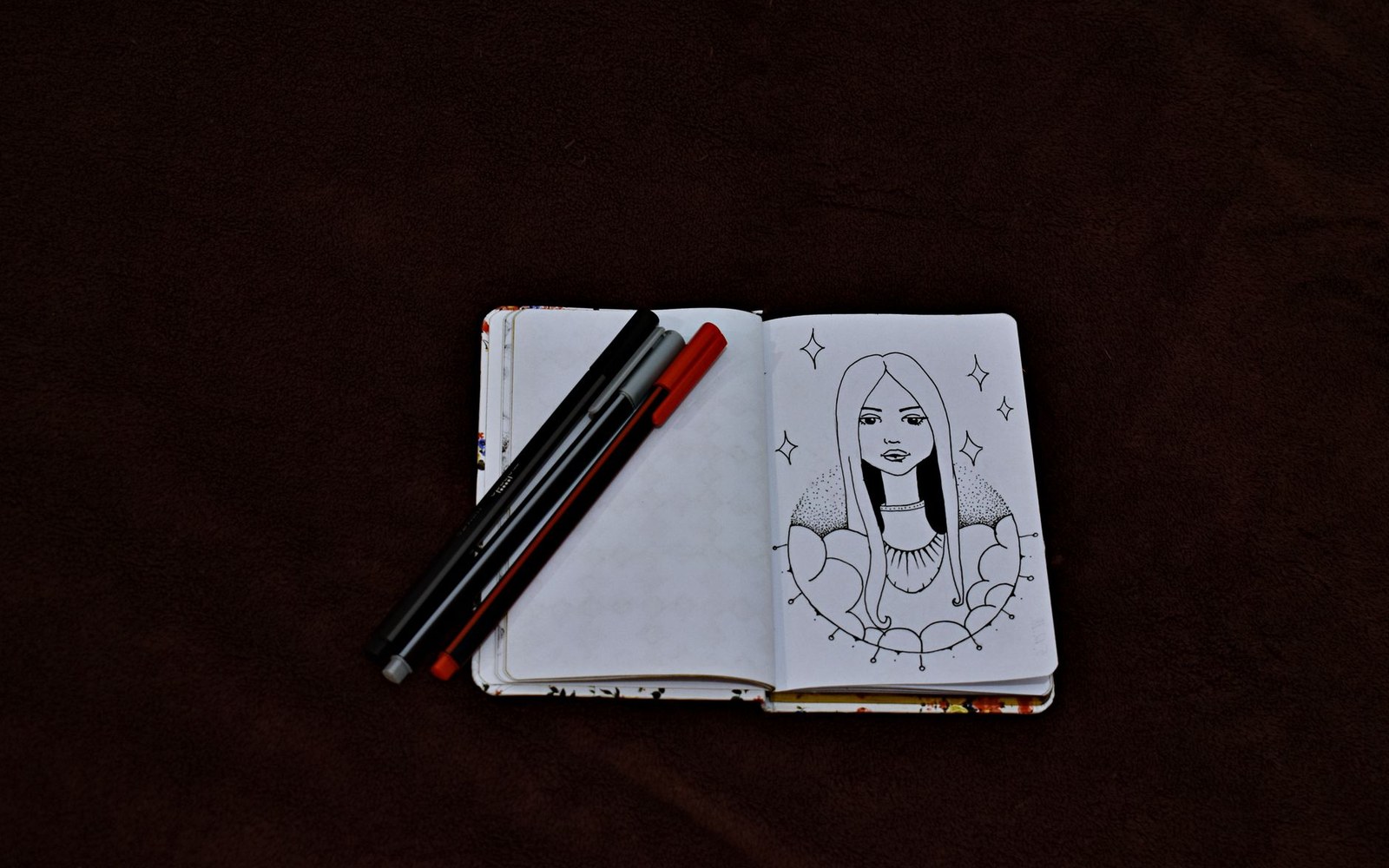
The moment you open a sketchbook in public, you stop being invisible.
 01.3
01.3The Social Geometry of the Pavement
Where you stand is not only a compositional choice. A corner position puts your back to a wall and limits the angle from which anyone can approach unseen; a spot in the middle of a pavement is an invitation. Neither is wrong, but both are decisions, and both will produce different drawings because they produce different interruptions.

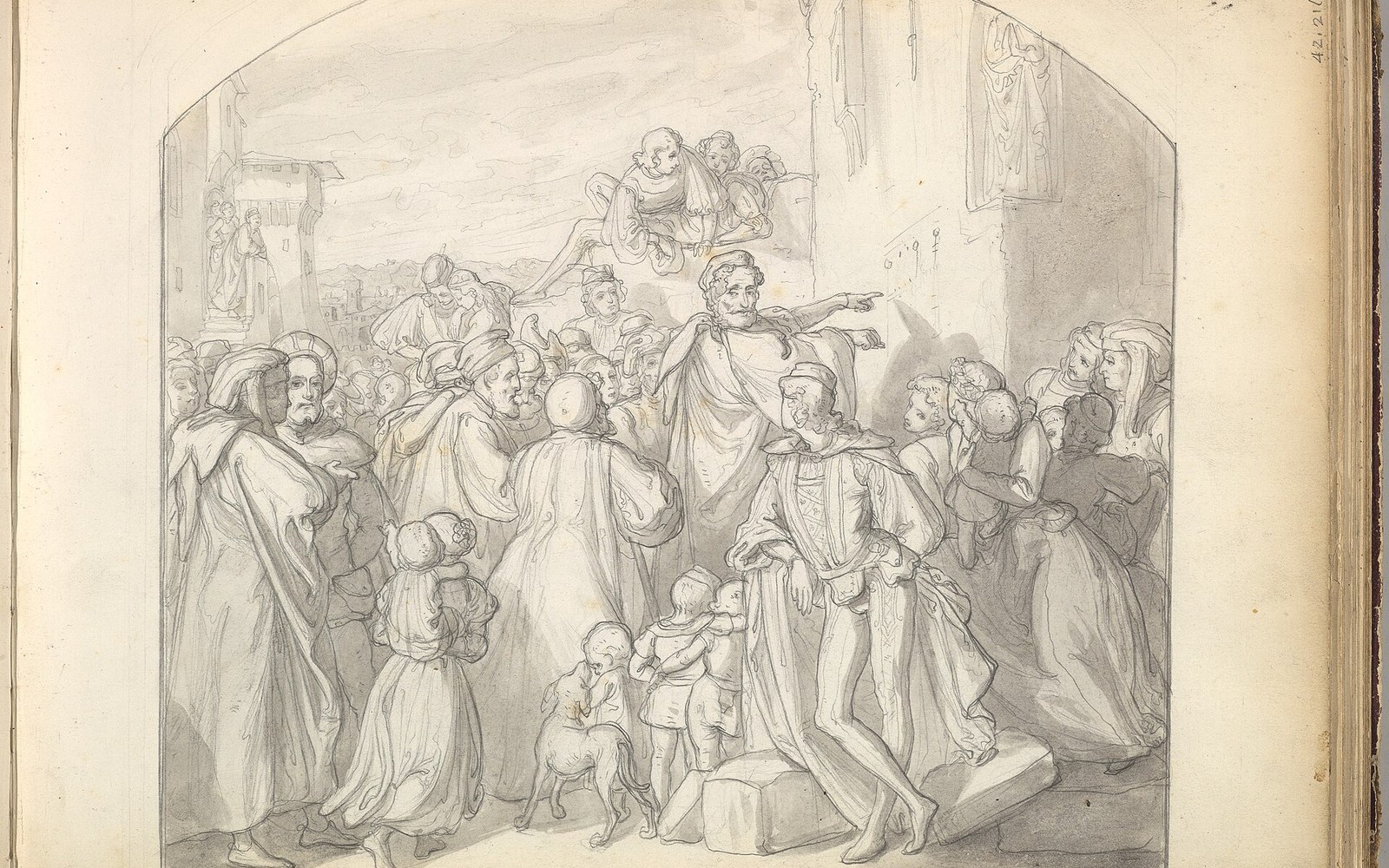
Interruption is the condition, not the exception. Someone will stop. Someone will ask what you are drawing, then expect to look, then offer an opinion on how good it is — or isn't. The most experienced location drawers have made their peace with this by treating the stopped stranger as part of the scene rather than an intrusion into it. The drawing does not pause; the hand keeps moving. This is not rudeness; it is method.
What this piece yields
- A figure drawing in a public space, back to a wall, in a plain urban setting.
Visibility also changes what you are able to draw. A subject who notices you and holds still, performing ordinariness, is a different subject from one who has not registered your presence. Both are true things to draw, but they are different truths. Ronald Searle, working under conditions that made observation a punishable act, understood this as an absolute: the unseen drawing is the only faithful one. Most location work carries no such stakes, but the principle that self-consciousness — yours or theirs — changes the record is worth holding.
Standing still in a city makes you conspicuous in direct proportion to the city's pace. Fast cities generate more interruptions per hour. The answer most drawers arrive at is not to hide but to become boring: a person standing with a book and a pen, doing something slow, eventually stops being interesting. Ten minutes in, most passers-by have filed you under a category that does not require further attention. The drawing that a short time limit tends to force into existence is partly a product of this social clock running alongside the light.