02 · Materials
Waterbrush and pans
A brush with a water reservoir and a tin of dry pans is the smallest complete colour kit that works standing up.
 02.2
02.2The smallest complete kit
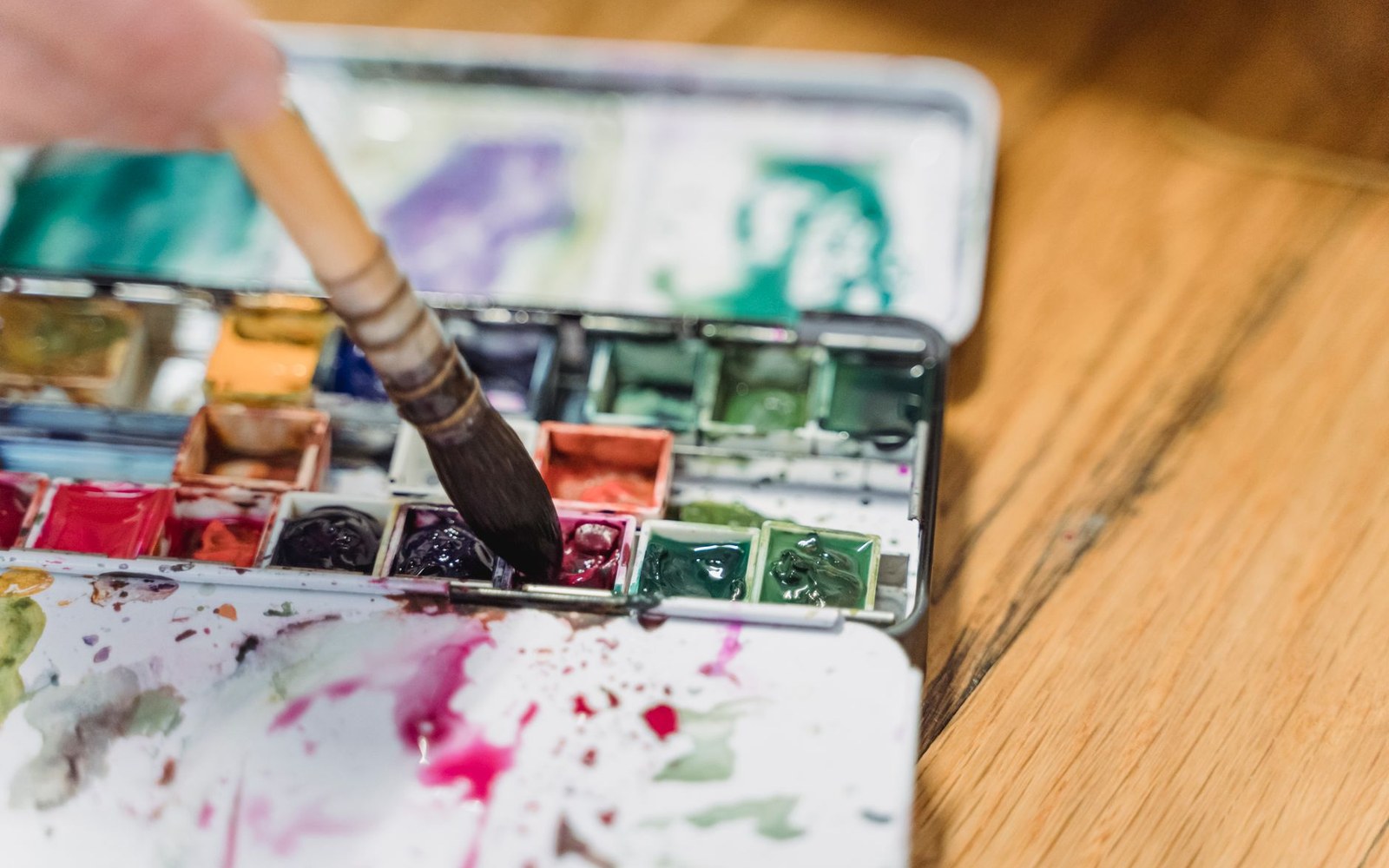
A waterbrush is a nylon brush with a hollow handle that holds water. Squeeze the barrel lightly and a controlled amount of water reaches the bristles without any jar, separate brush or search for a tap. Paired with a small tin of dry pan colours — individual cakes of compressed pigment, not tubes — this is the smallest self-contained colour kit that actually works when both hands are occupied and no surface is available.
The logic is purely mechanical. On location, the problem with wet media has never been the paint itself but the ancillary equipment: a water jar that tips, a second brush left uncapped, a palette that has to be held while the book is also held. The waterbrush eliminates all three. The reservoir replaces the jar. The pan tin acts as its own palette — wet the cake directly, lift the colour, work. The whole rig fits in a coat pocket beside the book, which is the point.
Materials and method
- 01waterbrush — a nylon brush with a hollow water-reservoir handle; squeezing the barrel releases water to the bristles
- 02pan colour — compressed dry watercolour cake; activated by a wet brush directly on the surface
- 03Colour Index code — the P-prefixed pigment identifier on a pan label that indicates permanence; the reliable check for lightfastness
How the materials behave
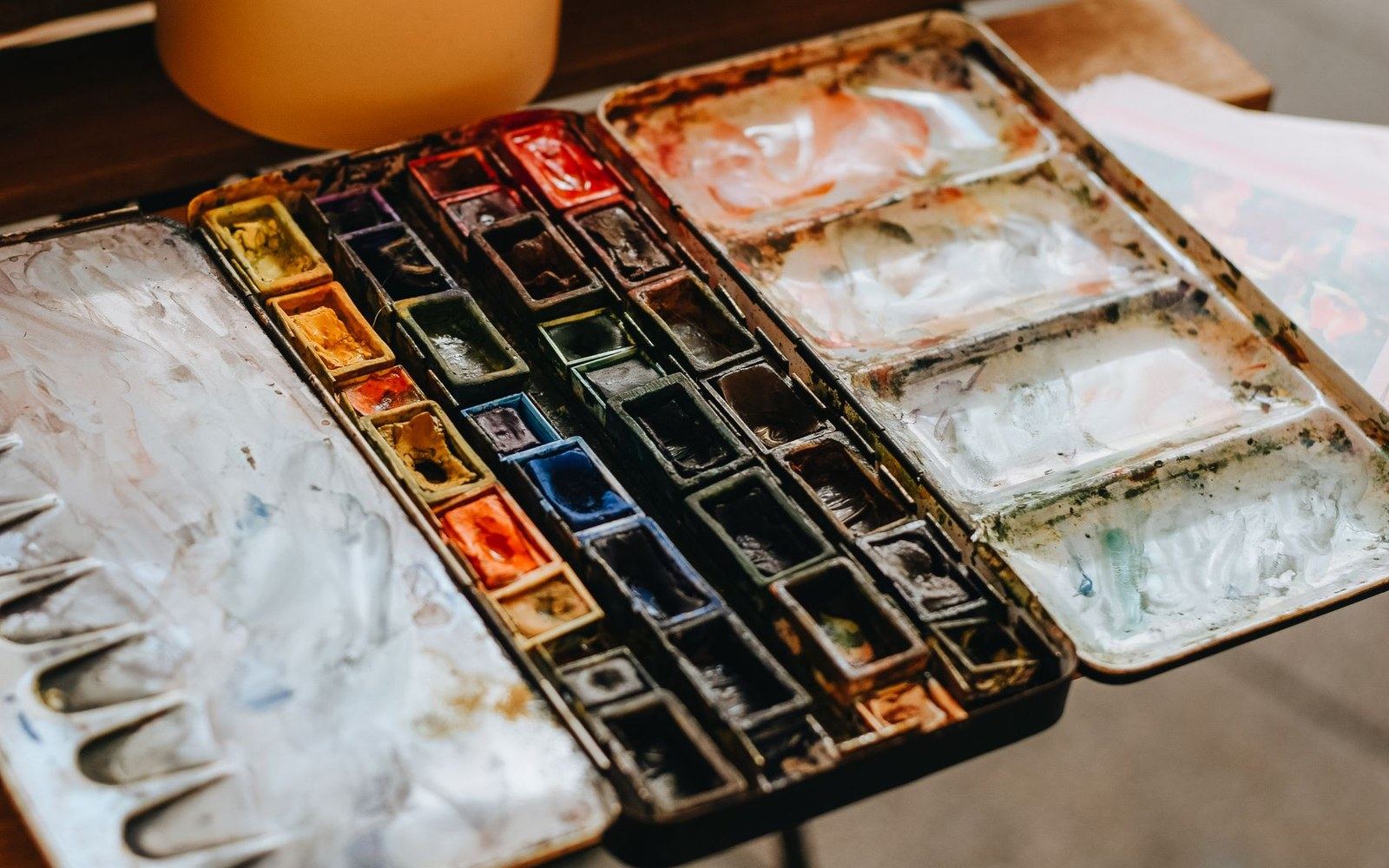
Pan colours are watercolour compressed into a solid cake. When dry they are inert; a wet brush activates the surface and releases pigment. The response time — how quickly a pan gives colour — varies with quality. Better-quality pans rewet quickly and release saturated colour from the first stroke. Lesser ones need more working, which slows everything down and matters on location where the twenty-minute limit is real.
The waterbrush delivers a gentler, more consistent flow than dipping into a jar, but it cannot match the volume of water a fully loaded natural-hair brush carries. This shapes what the kit does well. Flat washes over large areas are harder to execute evenly; the water supply runs short before the wash is done. What the kit handles cleanly is calligraphic colour work — a stroke of sky here, a shadow plane there, a quick note of flesh tone — which is, in practice, what most location colour drawing requires. The drawing itself, usually in pencil or ink, carries the structure. Colour is annotation.
The bristles of a nylon waterbrush are less absorbent than sable, which means the brush stays wetter longer but also means it does not spring back to a sharp point with quite the same reliability. A medium round is the most versatile size; too fine and the reservoir empties fast, too large and control suffers when working at sketchbook scale.
Keeping pans clean matters. Colours contaminate each other when a heavily loaded brush moves from one cake to the next. The fix is a wipe on a rag, a corner of cloth, or — when nothing else is to hand — a stroke on a spare patch of page. Some practitioners use the back endpaper of the book for this purpose; the smears accumulate into something worth reading later.
One genuine limitation is permanence. Pan colours vary widely in lightfastness, and the convenience end of the market leans toward fugitive pigments — colours that shift or fade under sustained light exposure. A small tin assembled from individual replacement pans of known pigment composition is more reliable than a budget set bought whole. The pigment code on the pan's label — P-prefixed, referencing the Colour Index — is the check worth making.
What the combination records
The waterbrush-and-pans kit imposes a discipline that turns out to be useful. Because large washes are awkward, the drawer tends toward economy: less colour overall, applied faster, in the right place. This produces drawings that are coloured with attention rather than coloured completely, which is usually what a location drawing needs. The photograph records everything in the frame. The drawing records what you noticed. Selective colour reinforces that hierarchy — a warm ochre on one facade, a quick grey-green on the water — rather than filling in the world like a map.
The response time — how quickly a pan gives colour — varies with quality.
Edward Ardizzone, working under conditions far more difficult than any peacetime sketcher faces, understood the value of a kit that imposed nothing extra on the act of looking. His watercolour work from the field is thin in means and dense in observation. The materials don't show off. Turner carried small sketchbooks with folded colour notes alongside pencil — the pans were crude by later standards, but the principle was the same: a minimum of apparatus between the eye and the page. That minimum is still the target.