02 · Materials
What Fades
Fugitive pigments and cheap paper are why some notebooks read wrongly two centuries on.
 02.4
02.4Why some notebooks lie
Fugitive pigments — colorants that shift or vanish under light and time — are why a two-hundred-year-old sketchbook can mislead as much as it informs. What looks like a muted, almost grey field wash may once have been a vivid crimson lake; what reads as pale ochre may have begun as a saturated emerald green. The notebook does not announce the change. It simply presents what survived.
The problem is not rare. Carmine, made from cochineal, fades badly in light. Prussian blue, one of the most popular pigments of the eighteenth and early nineteenth centuries, can shift toward green or disappear entirely in alkaline conditions. Indigo, widely used for skies and water, is notoriously unstable. J. M. W. Turner used all three across his sketchbooks, and conservators at the Tate — which holds the bulk of the Turner Bequest — have documented the degree to which some pages have drifted from their original tonality. Viewing a facsimile or a digitised scan compounds the problem: what you read as the artist's palette may be a record of chemistry, not intention.
What goes wrong and why
- 01Fugitive pigment — a colorant that fades or shifts with light or chemical exposure; the change is often invisible until it is complete
- 02Foxing — rust-coloured spotting on old paper; caused by iron contamination and biological agents in acidic stock
- 03Acidic paper — wood-pulp sheets that yellow and embrittle; standard from the mid-nineteenth century and still common in cheap notebooks
- 04Lightfast rating — a standardised measure of a pigment's resistance to fading; the ISO scale runs from very poor to excellent
Paper is the other variable. Acidic wood-pulp paper, standard from the mid-nineteenth century onward, browns and becomes brittle. The foxing — those rust-coloured spots — is partly iron contamination, partly biological. Eugène Delacroix worked in notebooks with rag-paper pages that have fared far better than many contemporary European sketchbooks, because linen and cotton fibre, properly prepared, are chemically stable in ways that early industrial paper is not.
For the working draughtsman this is not only a conservation problem — it is a reading problem. Studying a notebook from the past means understanding what you are actually looking at. A pale sky may have been worked hard. A drawing that appears compositionally timid may have originally carried a powerful mid-tone wash now entirely gone. Annotations sometimes survive where colour does not, because iron gall ink — though it corrodes paper over time — resists light better than most pigments.
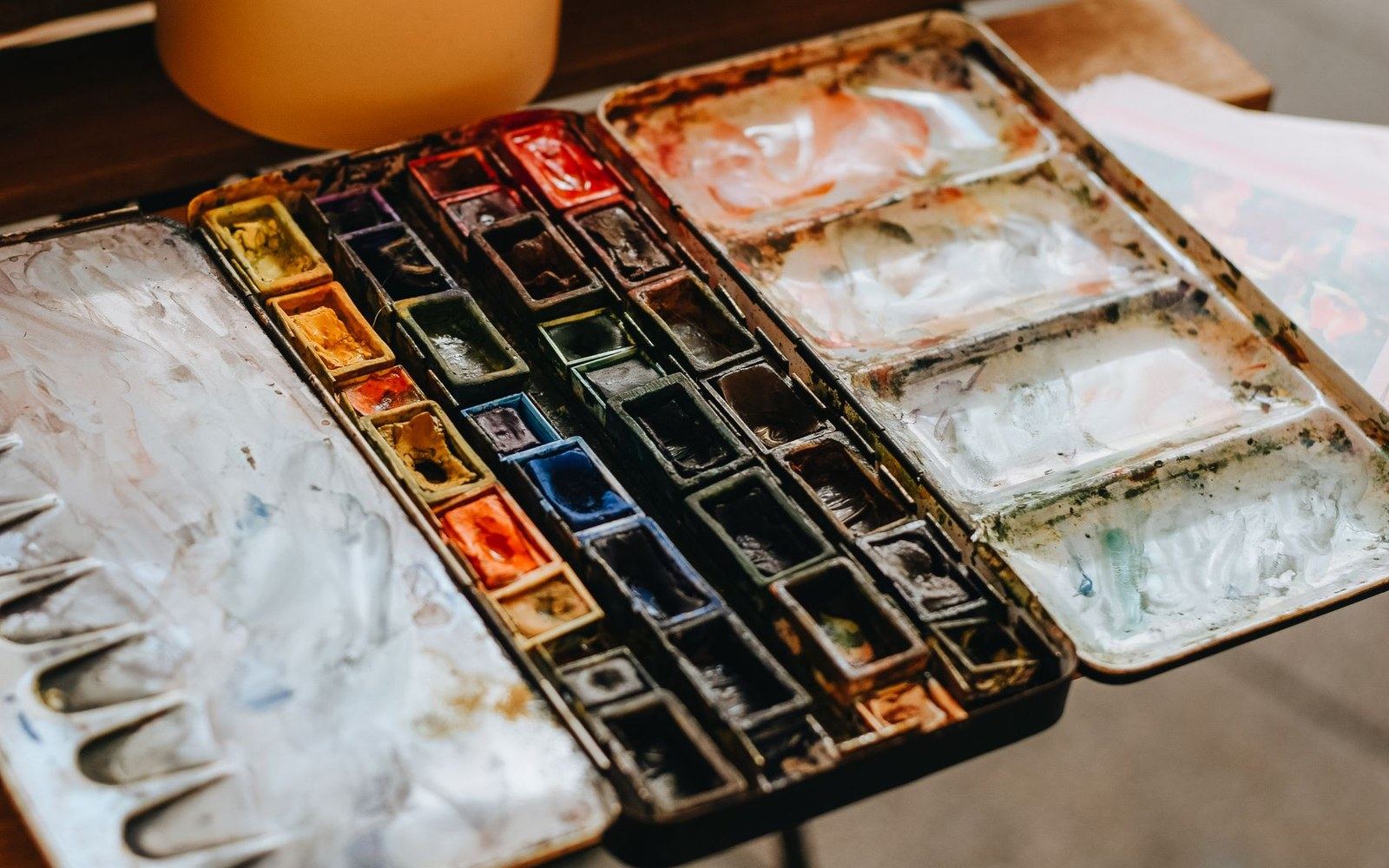
The lesson, looking forward, is equally practical. Materials described as lightfast have been tested against ISO standards for colour permanence. A pigment rated at the highest level of lightfastness will hold for a working lifetime; one rated lower is already a small act of loss, beginning the day the book closes.