03 · Looking
Delacroix in Morocco
Notebooks filled in 1832 that supplied his paintings for the next thirty years, because a drawing made on the spot carries information a memory does not.
 03.2
03.2The notebooks that outlasted the journey
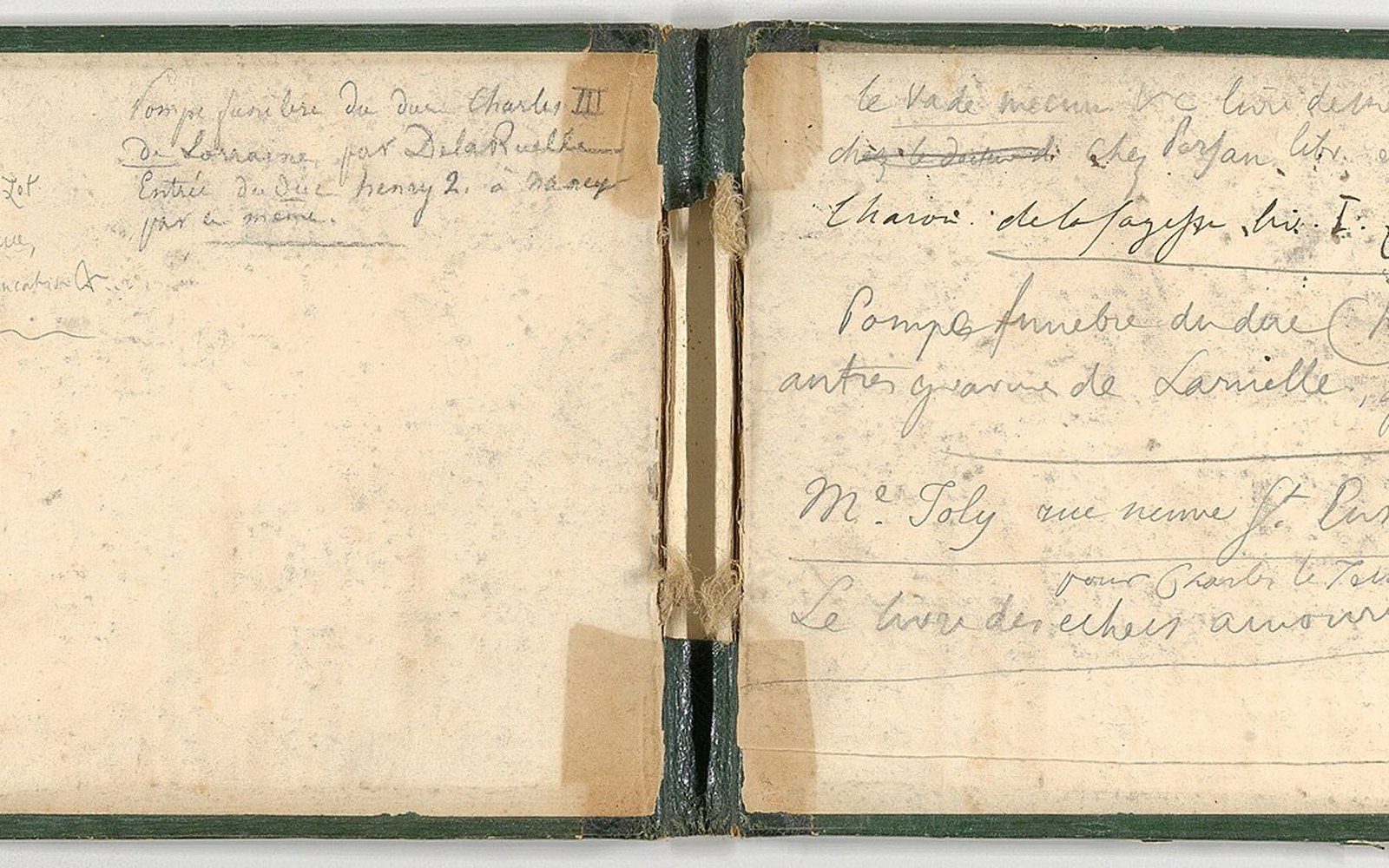
Eugène Delacroix spent six months in North Africa in 1832, travelling with a French diplomatic mission to the Sultan of Morocco. He was thirty-three, already established, and had never left Europe. By the time he returned to Paris he had filled seven notebooks — small, cloth-bound, carried in a pocket — with drawings, watercolours and dense marginal annotation. Those notebooks fed his paintings for the next three decades.
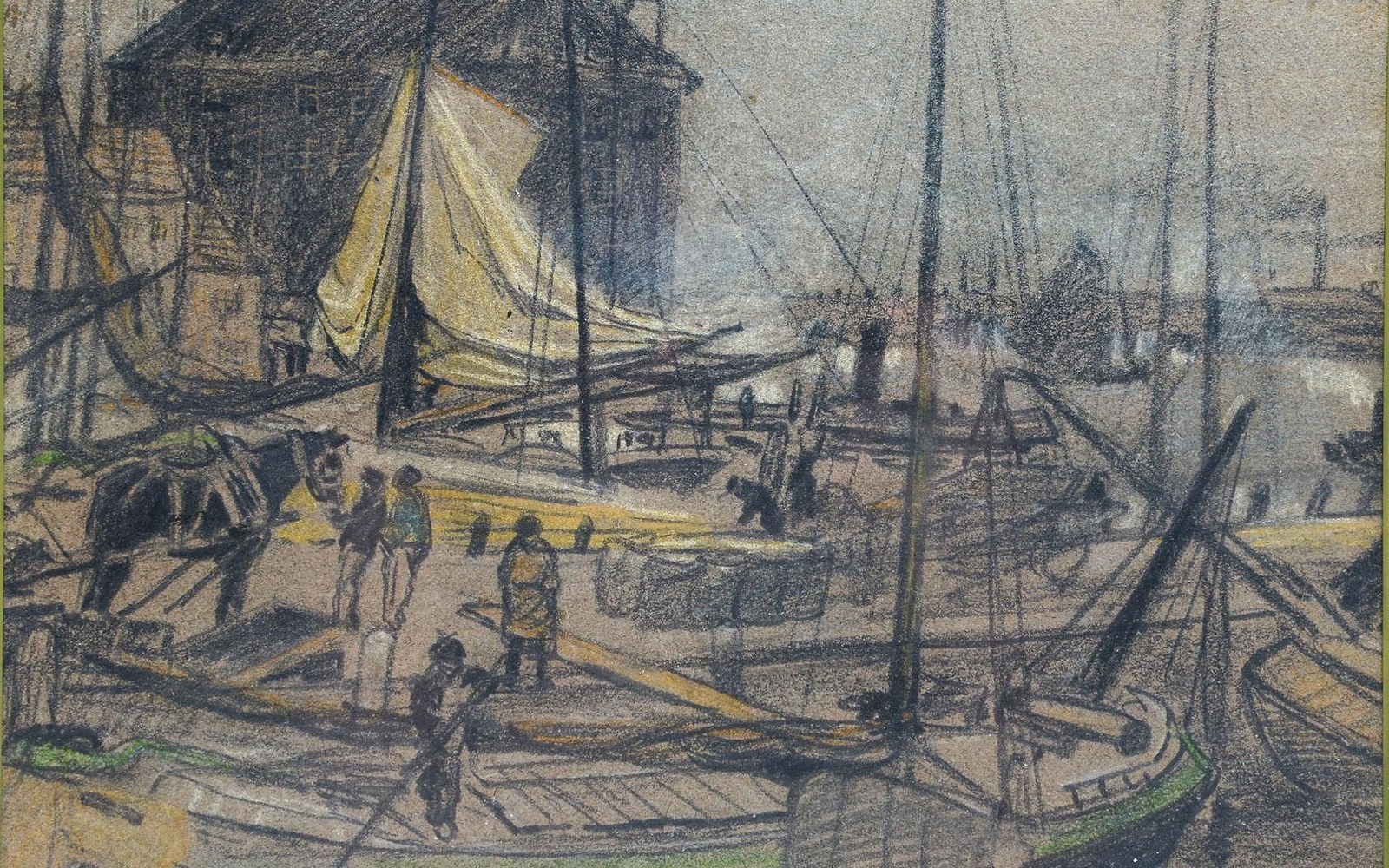
The drawings themselves are not grand. They are working documents: quick architectural elevations of doorways in Tangier, colour swatches pressed against written colour notes, figure studies caught in the minutes before a subject moved or the light shifted. What made them inexhaustible as source material was exactly their incompleteness — the gap between what the line recorded and what the eye had briefly known. A photograph forecloses that gap. A drawing holds it open.
What the notebooks contain
- 01Seven small cloth-bound notebooks, 1832
- 02Drawings, watercolour swatches and marginal colour annotations
- 03Held: Musée du Louvre and Bibliothèque de l'Institut de France, Paris
- 04Primary source for studio paintings made over the following three decades
Delacroix understood, in practice if not always in theory, that the notebook page captures two things simultaneously: observed fact and the draftsman's act of attending. The doorway in Tangier is described; so is the speed at which he was working, the angle at which the light was falling, the colour note scrawled in the margin because there was no time to mix anything. Words on a drawing are not failure; for Delacroix they were structural. His colour notations — grey-violet in the shadow of a wall, the precise warm ochre of a courtyard floor — amount to a verbal extension of the visual record, and they survive in the notebooks held at the Musée du Louvre and the Bibliothèque de l'Institut de France in Paris.
What the sketch contains that memory does not
The great studio paintings that followed — Women of Algiers in Their Apartment (1834), the various Arab subjects that continued into the 1850s — are usually read as acts of imagination fuelled by memory. They are more accurately acts of imagination fuelled by evidence. Delacroix returned to the notebooks not as an aide-mémoire but as a primary source, the way a journalist returns to notes taken on the spot rather than to a general recollection of events. The specificity was in the book, not in his head, and he knew the two things were different.
This is the central argument for location drawing over photography: a photograph is indiscriminate — it records everything inside the frame with equal weight. A drawing records only what the draftsman decided to look at. The Moroccan notebooks show Delacroix making those decisions under time pressure, in strong light, among subjects who would not hold still. The decisions are visible in the page: what is rendered in detail, what is summarised in two lines, what is marked as a colour note and left. Measuring by eye in these conditions is not a careful academic procedure; it is fast, committed and slightly wrong, and the slight wrongness is information too — it tells you how quickly he was working and what he thought mattered most.
What the notebooks do not contain is equally telling. There is very little that is decorative or composed for an audience. These are private working pages, and the kept mistakes — the revised proportion, the second attempt at a roofline — are part of the record. A sketchbook that has been edited stops being evidence of anything. Delacroix did not edit. The pages survive as they were made: crowded, annotated, occasionally spattered, marked by thirty years of subsequent use as studio references rather than thirty years of being preserved.
The lesson is practical, not historical. Any notebook used on location to gather material for later work needs to be fast enough to catch what is actually there, specific enough to be useful six months later, and honest enough to record the draftsman's uncertainty alongside the observed fact. Delacroix's Moroccan pages satisfy all three conditions because he was working under real constraint — time, light, the pace of travel — rather than the artificial freedom of the studio. Constraint, as location drawing repeatedly demonstrates, is what makes the mark carry weight. The six months in North Africa produced drawings he could work from for thirty years because they were made under pressure, not despite it.