04 · Sketchbooks
Urban Sketchers
One rule — draw on location — and a private habit became a documented worldwide practice.
 04.2
04.2The Rule That Made It Work
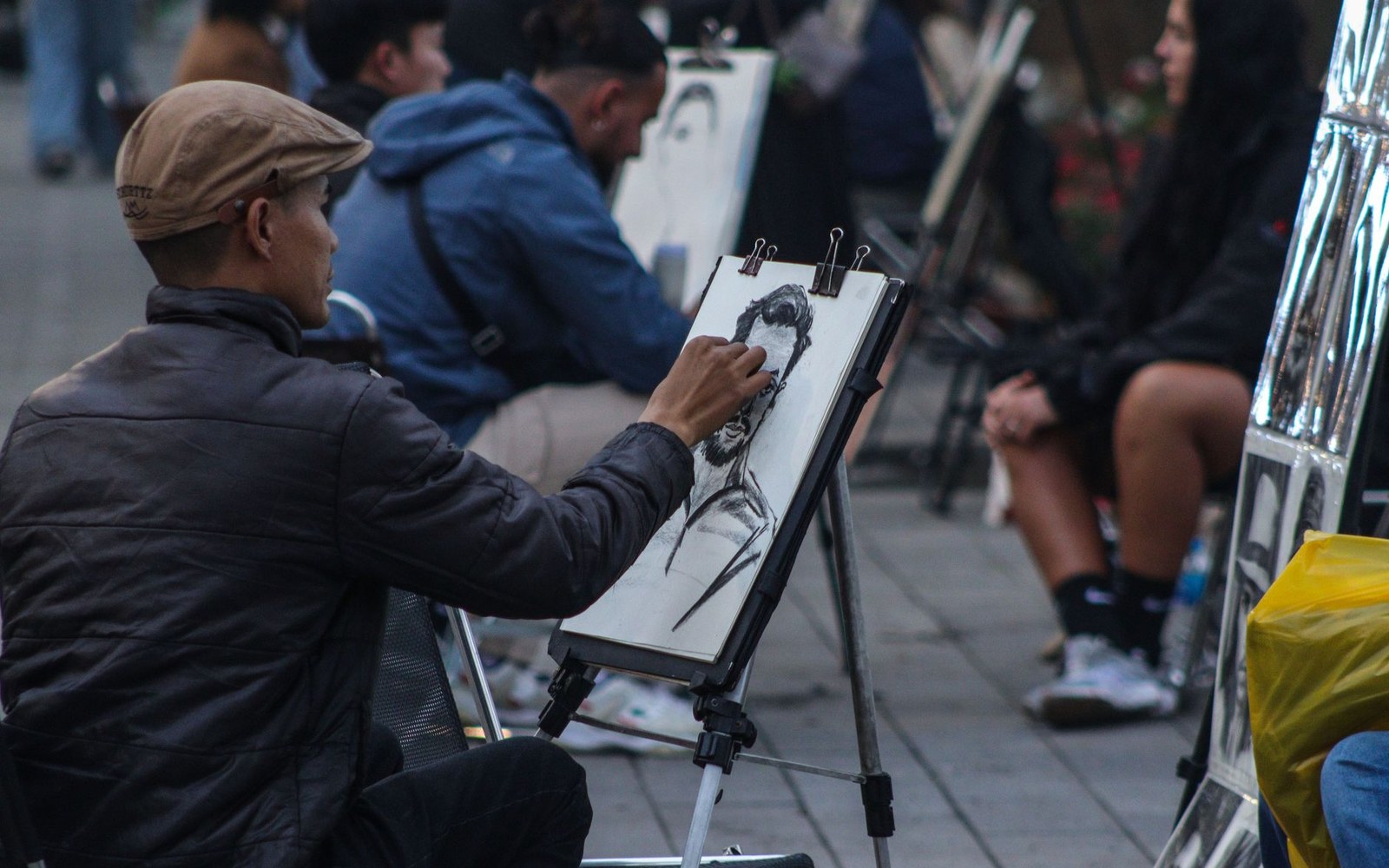
Gabriel Campanario, a Seattle-based newspaper illustrator, started Urban Sketchers in 2007 as a blog. The premise was deliberately minimal: drawings made on location, posted with the place identified. No studio reworking, no reference photographs used later at a desk. The drawing had to happen in front of the subject. Everything else — scale, medium, duration, skill level — was open.
That single constraint turned out to be generative rather than limiting. It forced the question that location drawing always forces: what do you look at, and what do you leave out? A photograph answers that question automatically, through the frame and the focal length. A hand drawing answers it through time and attention, which is why the two records are never quite the same thing. What the camera misses is precisely what a drawing insists on declaring.
What the rule changed
- 01on-location rule — draws from the subject directly; no desk reworking from photographs
- 02public posting with place identified — turns individual drawings into a distributed, searchable archive
- 03no medium prescribed — convergence on practical field tools happened organically, not by instruction
By the mid-2010s, Urban Sketchers had grown from a blog into a nonprofit organisation with a formal manifesto, chapter groups on every inhabited continent, and an annual international symposium that moves cities each year. Campanario, as its founder, built an editorial structure that maintained the on-location rule while the community scaled. Chapters are locally organised but affiliated through shared standards, and their work is logged publicly — which matters, because the aggregate becomes something like a distributed sketchbook of the contemporary world.
What It Actually Documented
The community's collective output is, in aggregate, a form of reportage drawing without an assignment editor. Individually, each sketch is personal. Collectively, the archive records streets, markets, transit systems, demolitions and ordinary interiors at a level of specificity that systematic photography rarely attempts and urban planning surveys do not produce.
The tradition Urban Sketchers plugged into is long. J. M. W. Turner filled some three hundred sketchbooks working directly from landscape and architecture; Eugène Delacroix's Moroccan notebooks, kept during his 1832 trip to Tangier, supplied compositional material for paintings made decades later. Both men were drawing because looking and drawing are not the same activity as looking and moving on — the commitment to mark-making changes what gets seen. Urban Sketchers democratised that discipline without diluting it.
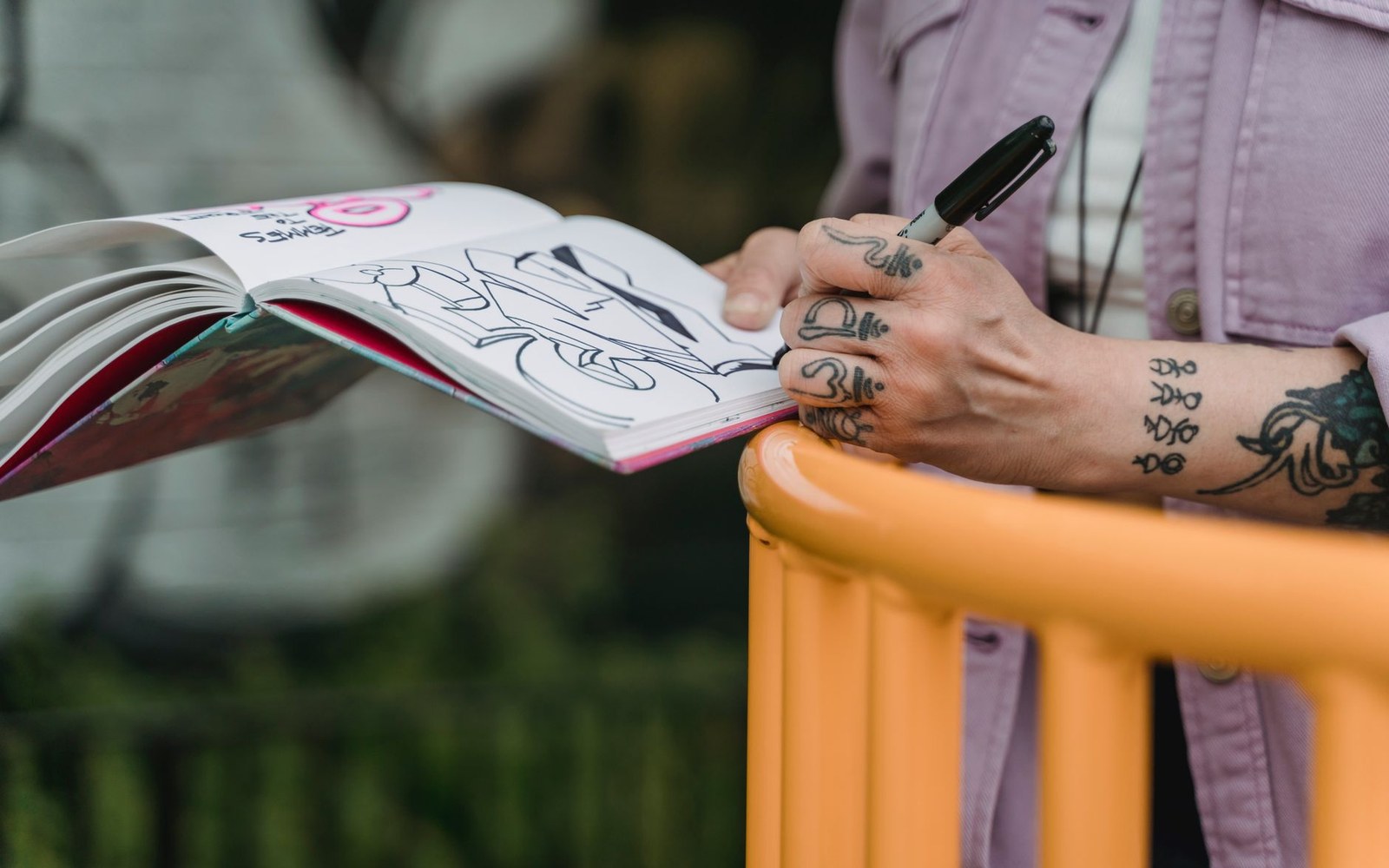
The on-location constraint also meant that certain technical habits became widespread simply because they work in the field. A waterbrush and a tin of pan colours, a small format book that can be held in one hand, toned paper that lets white gouache read as light — these are not prescribed equipment but practical convergences. The sketchbooks held at the Victoria and Albert Museum, the Tate and the Imperial War Museum — Edward Ardizzone's war drawings among them, Ronald Searle's Changi notebooks among the most extreme examples of location work ever produced — demonstrate the same pragmatism under very different pressures. Urban Sketchers operates without those pressures, but the material logic is identical: carry what survives being carried, draw what is in front of you.
The Sketchbook as Public Record
What the movement changed, beyond scale, is the visibility of the practice. Drawing in public has always attracted attention; being watched is part of the working condition of any location artist. Urban Sketchers normalised it by making the social contract legible — here is someone drawing this place because it is worth looking at, and here is the result posted online with a location tag. The drawing becomes evidence of a kind: evidence of attention paid.
David Gentleman, who has drawn in ink and watercolour on location across decades, has written about drawing as a form of looking that photography forecloses — the camera too quick, the eye too slow unless the hand is also moving. Urban Sketchers, at its best, operationalises exactly that: the sketchbook not as souvenir but as the residue of genuine observation. The organisation now has tens of thousands of members. What it has also built, quietly, is one of the largest ongoing archives of hand-drawn location observation in the history of the medium.