07 · Collections
The Turner Bequest
The will was disputed, the paintings were famous, and the sketchbooks almost went unnoticed — until they became the most studied body of location drawing in any public collection.
 07.1
07.1How the Books Arrived
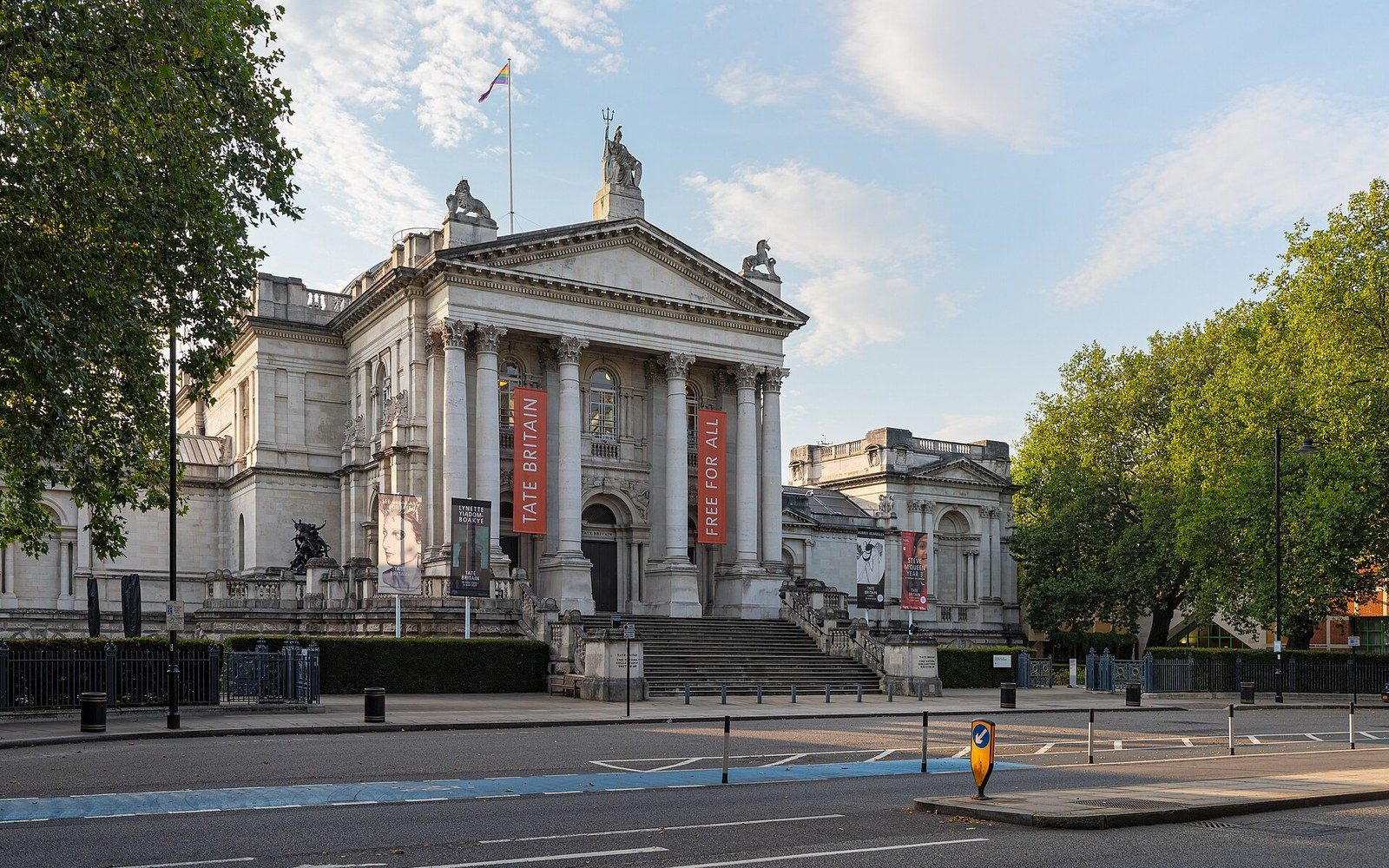
J. M. W. Turner died in December 1851, leaving behind a will of spectacular ambiguity. After years of Chancery proceedings, a compromise settlement in 1856 transferred his finished and unfinished works to the National Gallery, which eventually passed the collection to what is now Tate Britain. The bequest was vast: paintings, drawings, prints, and roughly three hundred sketchbooks, filled across six decades of compulsive working on location.
The books had not been the point of the legal argument. The paintings were. But the sketchbooks that came with them — some no larger than a coat pocket, some disbound and interleaved with loose sheets — turned out to be the record that made everything else legible. Turner's sketchbooks show him working in pencil on toned paper, annotating colours and times of day in handwriting so compressed it reads almost as texture rather than text. They are notebooks in the strict sense: instruments of looking, not finished objects.
The catalogue system
- 01Finberg numbering — the TB I / TB II / letter-designation system A. J. Finberg assigned in 1909; still in use as the primary scholarly reference
- 02Tate object numbers — the parallel internal numbering system; researchers must navigate both
- 03A Complete Inventory of the Drawings of the Turner Bequest — Finberg's 1909 catalogue raisonné; the structural skeleton of all subsequent scholarship
The collection is held at Tate Britain in London. The sheer scale of it — tens of thousands of individual works when sheets and studies are counted separately — drove the need for systematic cataloguing that took most of the twentieth century to develop properly.
The Catalogue and Its Consequences
The foundational scholarly tool is the catalogue raisonné compiled by A. J. Finberg, published in 1909 as A Complete Inventory of the Drawings of the Turner Bequest. Finberg assigned each sketchbook a Roman numeral — TB I, TB II, and so on — along with letter designations for individual leaves. That numbering system is still in use. It was not designed with modern digital access in mind, and its sequencing reflects the physical order Finberg found the books in, not necessarily the chronological order in which Turner used them. Later scholars, including Andrew Wilton and the teams behind the Tate's online catalogue, have revised datings and attributions substantially, but Finberg's alphanumeric spine remains the reference spine.

The practical consequence is that searching the collection requires knowing both the old designation and the Tate's own object-numbering system, which runs in parallel. Researchers who come to the books through reproduction often arrive with one identifier and need the other. It is a manageable inconvenience, but it shapes what gets studied: the well-reproduced books — the Venice notebooks, the Rhine journey books — are cited constantly, while thinner, less legible volumes from Turner's earlier years sit in relative quiet.
Access and What It Decides
Physical access to the sketchbooks is governed by Tate's study room procedures. Many books are too fragile to open flat without risk; some have been disbound deliberately to allow individual sheets to be stored and displayed safely. The digitisation programme, which has made a substantial portion of the collection available through the Tate's online platform, has changed the first encounter with these notebooks entirely: a researcher can now read a book's sequence on screen before ever handling it.
But digitisation is not neutral. The scanner resolves what the page presents flatly. Toned paper, which Turner used extensively, loses its chromatic warmth under certain lighting conditions; pencil lines that read clearly in raking light can flatten to near-invisibility in direct scan. The physical experience of reading a small, hand-held sketchbook — the page turn, the sense of how much paper remained, the smell of old size — carries information that no image file contains. Scholars who have worked with both consistently describe the digital record as essential and insufficient in the same breath.
What the access rules determine, finally, is emphasis. A book held behind glass in a display case communicates one thing; the same book open on a study room table communicates another. The bequest's guardians have to make that choice repeatedly, balancing conservation against the contact with original material that serious study of location drawing still requires. Turner drew quickly, on location, often in poor conditions, fitting a whole skyline or a set of architectural proportions onto a page the size of a hand. Reading that decision accurately demands, at some point, the actual object.