05 · Witness
Drawing as Evidence
Where cameras are excluded, the drawn line remains the only record.
 05.3
05.3What the hand produces that the lens cannot
Courtroom drawing survives not as nostalgia but as necessity. In the United Kingdom, cameras have been prohibited inside criminal courts since the Criminal Justice Act 1925, and the prohibition holds in many jurisdictions worldwide. A sketch artist working from the press bench produces the only contemporaneous visual record of a defendant's posture, a judge's expression, the specific theatre of a proceeding. That record is made under pressure, in low light, often in under twenty minutes — and it carries information a photograph taken afterward cannot recover.
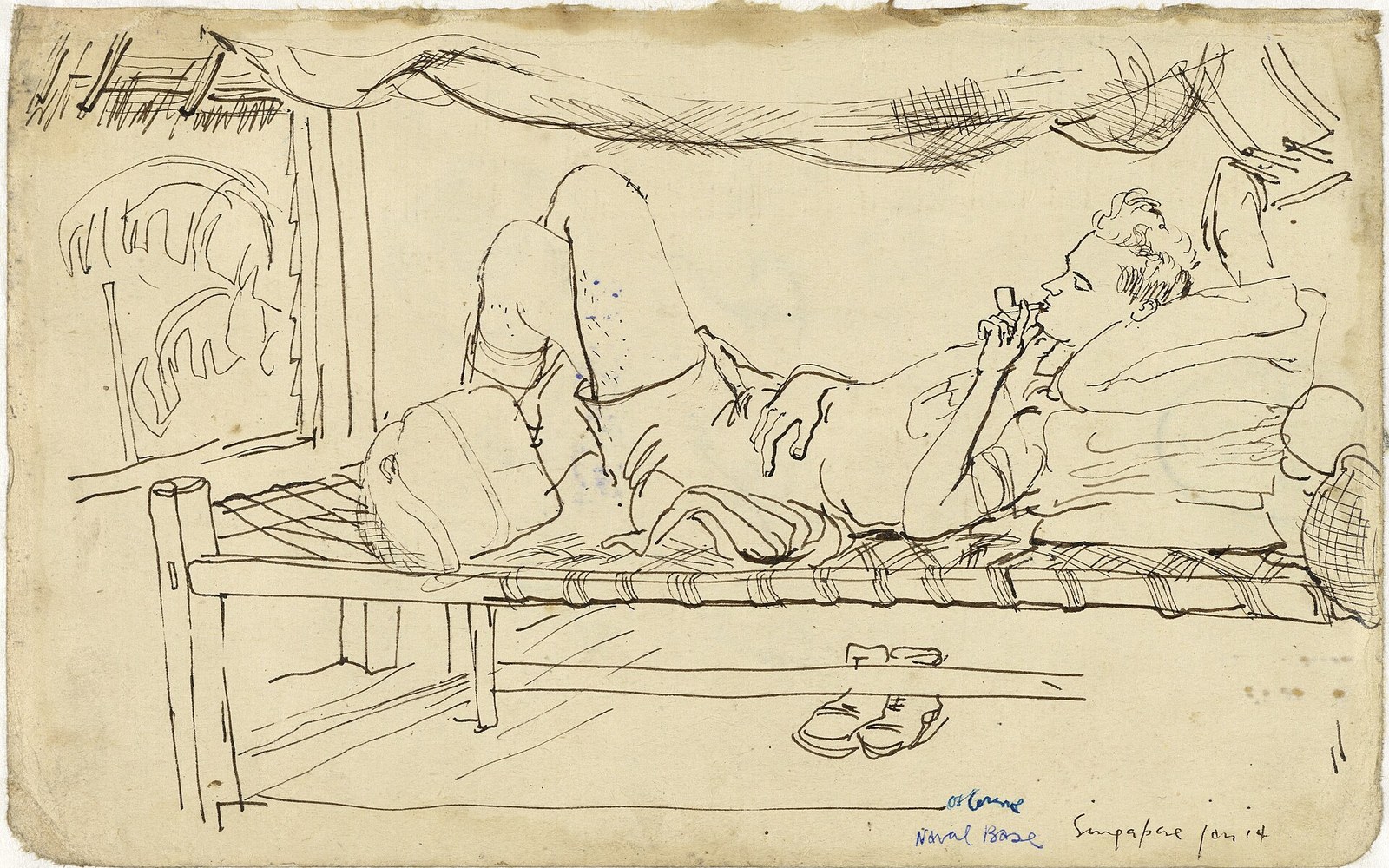
The same logic runs through field reportage. Ronald Searle kept drawings hidden under the mattresses of prisoners with cholera because no camera existed in that compound, and even if one had, no film would have left it. Drawings left on paper. The hand records where a lens is confiscated, excluded or simply absent, and the resulting marks are evidence — not illustration, not decoration, but primary document.
What makes a drawing evidential
- 01Contemporaneous record — made at the moment, not reconstructed from memory or other sources
- 02Annotation — written colour notes, names, times that anchor the image to a specific event
- 03Spatial information — positioning of figures relative to each other, which photography from a fixed permitted angle cannot recover
- 04Survival — a drawing on paper leaves a jurisdiction on paper; it cannot be confiscated as easily as film
What distinguishes evidential drawing from other location work is the burden it carries. A courtroom artist is not composing; she is witnessing. The spatial relationship between accused and accuser, the direction a witness faces, the moment a verdict lands on a family in the gallery — these are the data. Artists including Priscilla Coleman, who covered British trials for decades, and Elizabeth Williams, known for her work at the International Criminal Court in The Hague, developed a practice that is methodologically closer to stenography than to reportage in the looser sense. Speed disciplines the line. Omission is not a stylistic choice but a record of what time allowed.
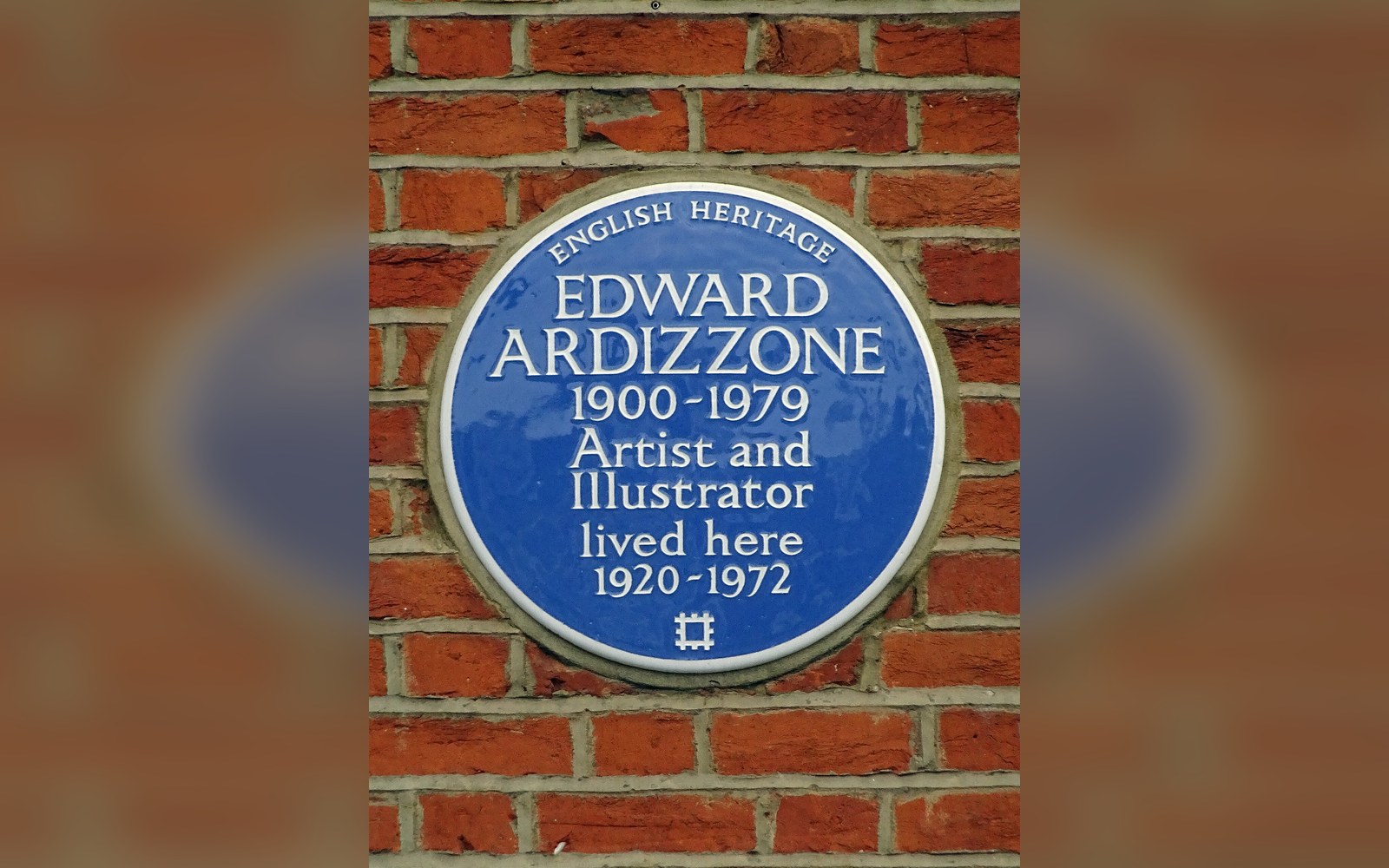
Field conditions impose their own constraints. War artists attached to military units — Edward Ardizzone among them — drew where a camera would have required permissions that drawing did not. The sketchbook is smaller than a camera, quieter, and carries none of the equipment's implicit authority that makes subjects self-conscious or hostile. That invisibility is part of its evidentiary value: the drawn record is made closer to the event, under less interference from the event's participants.
The annotated page matters here particularly. A courtroom drawing without written colour notes, names and times becomes ambiguous; with them, it becomes a dated document that can be cross-referenced against trial transcripts. The annotation is not supplementary — it is what converts a skilled likeness into archival evidence. Collections including the Imperial War Museum hold notebooks precisely because those annotations survived, and the drawings without them would be half-mute.
Where recording is forbidden, the capacity to draw is the capacity to testify.