05 · Witness
Ardizzone as War Artist
The line that stayed domestic even when the subject wouldn't.
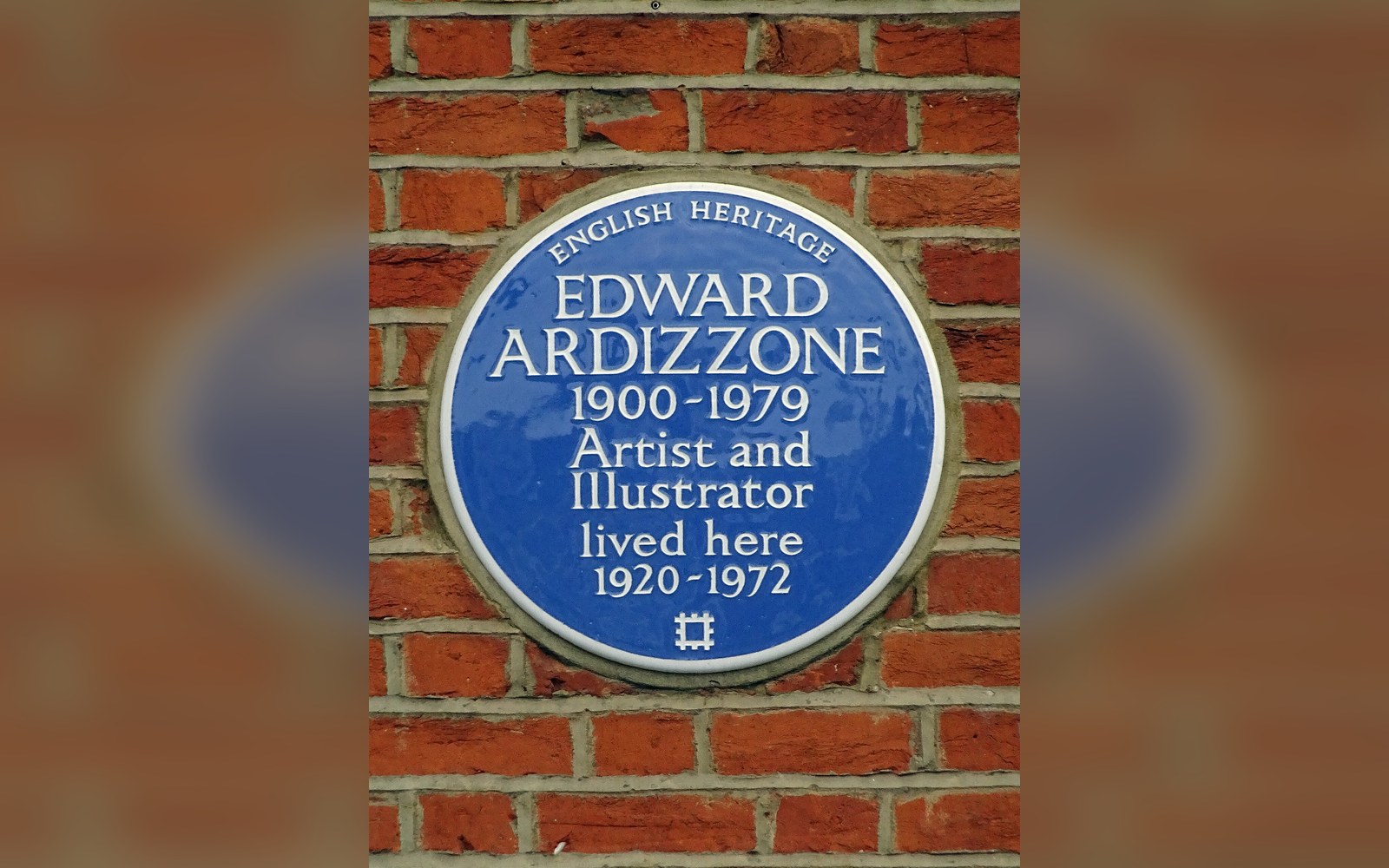 05.1
05.1The Domestic Eye in Extreme Places
Edward Ardizzone is known primarily as an illustrator — the man who drew Tim All Alone and gave children's books a warm, rounded world of harbour walls and tea-shop windows. What the children's library obscures is that he spent large portions of the Second World War as an official British war artist, accredited to campaigns in North Africa, Sicily, Italy, and northwest Europe, and that he produced some of the most honestly observed drawn reportage of that conflict.
His drafting style never militarised. The figures he drew in field hospitals and bombed-out bars remained as rounded and particular as the characters in his picture books — men with weight to them, sitting in specific chairs, looking tired in ways a caption cannot fully explain. That continuity of touch is not naivety. It is a form of insistence: that a soldier eating from a mess tin is still a person, and that a drawing should say so.
The work and where it lives
- 01Imperial War Museum, London — holds the substantial collection of Ardizzone's war drawings, catalogued online
- 02War Artists' Advisory Committee — the WAAC commissioned and directed British war artists during the Second World War; its archives are at the IWM
- 03Tim All Alone — Ardizzone's 1956 picture book, cited to establish the contrast between his civilian reputation and his war work
What He Drew and Where He Drew It
Ardizzone worked in pencil and watercolour, often on small sheets that could be managed in difficult conditions. His line was economical — he had spent enough years illustrating books under editorial pressure to know that a mark either earns its place or should not be there. In the field, that economy became functional. There was no time for careful construction, and the disrupted sightlines of an active theatre of war meant that composing fast was less a technique than a necessity.
What resulted is a body of work held substantially at the Imperial War Museum, London, which holds the largest collection of his war drawings. Looking at them in sequence — as you can, given that the museum's collection is catalogued online — is to notice what he chose and what he left out. The violence is rarely direct. Ardizzone drew its aftermath and its margins: the waiting, the exhaustion, the requisitioned cafés, the rubble that had recently been a street. He drew what was happening between the events, and in doing so recorded something a photograph taken at the decisive moment cannot: the texture of duration, of a war lived in.

That approach aligns with a broader truth about location drawing — that the drawn line records attention, the choice of what to look at rather than a mechanical capture of whatever was in front of the lens. Where a press photograph might fix on wreckage or action, Ardizzone's eye moved to a soldier asleep against a wall, or a group of men playing cards in the ruins of a building whose roof had not survived the week. The annotation on some sheets — a place name, a date scrawled in his hand — anchors the image without over-explaining it.
The Line as Evidence
There is a question worth asking about any war artist's work: is it useful as evidence, or is it something else — memorial, interpretation, document of the drawer's own position? With Ardizzone, the answer is probably all three at once. He was not smuggling drawings out of a prison camp, as Ronald Searle kept drawings hidden under the mattresses of prisoners with cholera in Thailand. Ardizzone was accredited, commissioned, and relatively free to move within the theatre. What he lacked was the coercive authority of a camera to freeze a moment. What he gained was the ability to stay longer, to synthesise what he had seen over an hour into a single image that no single instant would have yielded.
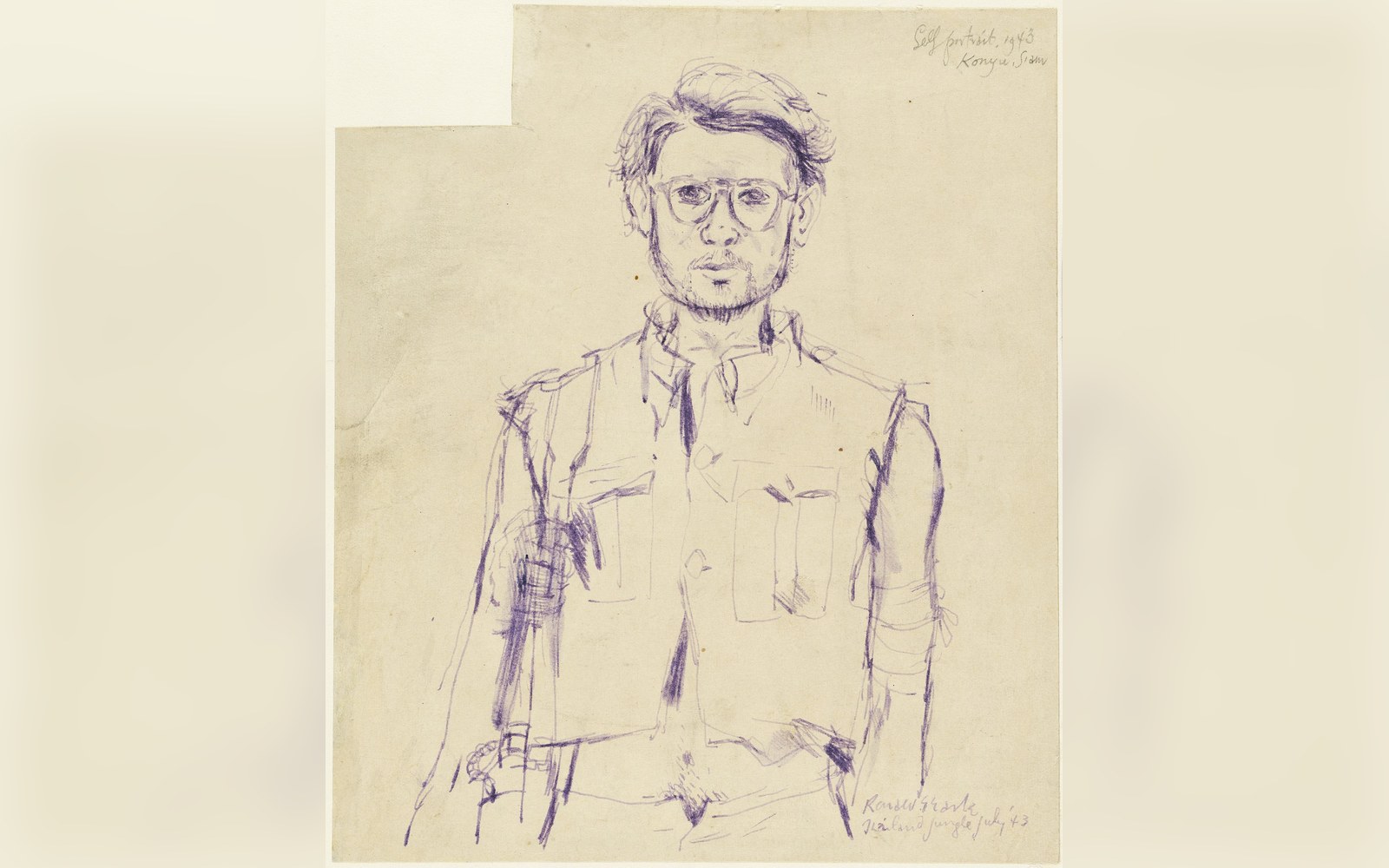
The War Artists' Advisory Committee, which oversaw British commissions during the Second World War and sent artists including Paul Nash, Henry Moore, and Ardizzone into the field, understood that drawn and painted records were doing different work from photographic ones. The committee's archives, held at the Imperial War Museum, show a genuine institutional conviction that image-making by hand was worth funding precisely because it produced a different kind of knowledge.
Ardizzone's domestic eye — the same eye that made Tim's world feel solid and inhabited — was not a limitation in extreme places. It was his method. It kept the person in frame when everything around him was trying to reduce people to categories: casualty, combatant, civilian. The line stayed human because he decided it should.